
A difference between Cannabis systems is a starting point for review. Its meaning depends on what each report measures and when the information was recorded.
Agree on the comparison first. Then follow the records, explain supported differences and make the next check clear.
Ask Three Questions Before Comparing Totals
- Do both reports cover the same entity, activity and reporting period?
- Are you comparing product quantities, accounting values, sales or cash movements?
- Do the units, cutoff dates and report versions line up?
A product report, costing schedule and bank report answer different questions. Establish how the records relate before deciding what their totals should show.
Build One Comparison Sheet
Start with the two sources that should explain the questioned number. Record:
- The entity, period and cutoff date.
- The source system, report name and version.
- The measurement and units used.
- The person responsible for each source.
- Any missing, incomplete or preliminary information.
For a cultivator or manufacturer, the supporting records may include production activity, product movements, purchases, costing schedules, wholesale invoices and general-ledger activity. An integrated operator may also need point-of-sale transactions, payment settlements and bank deposits.
Follow one retail sale
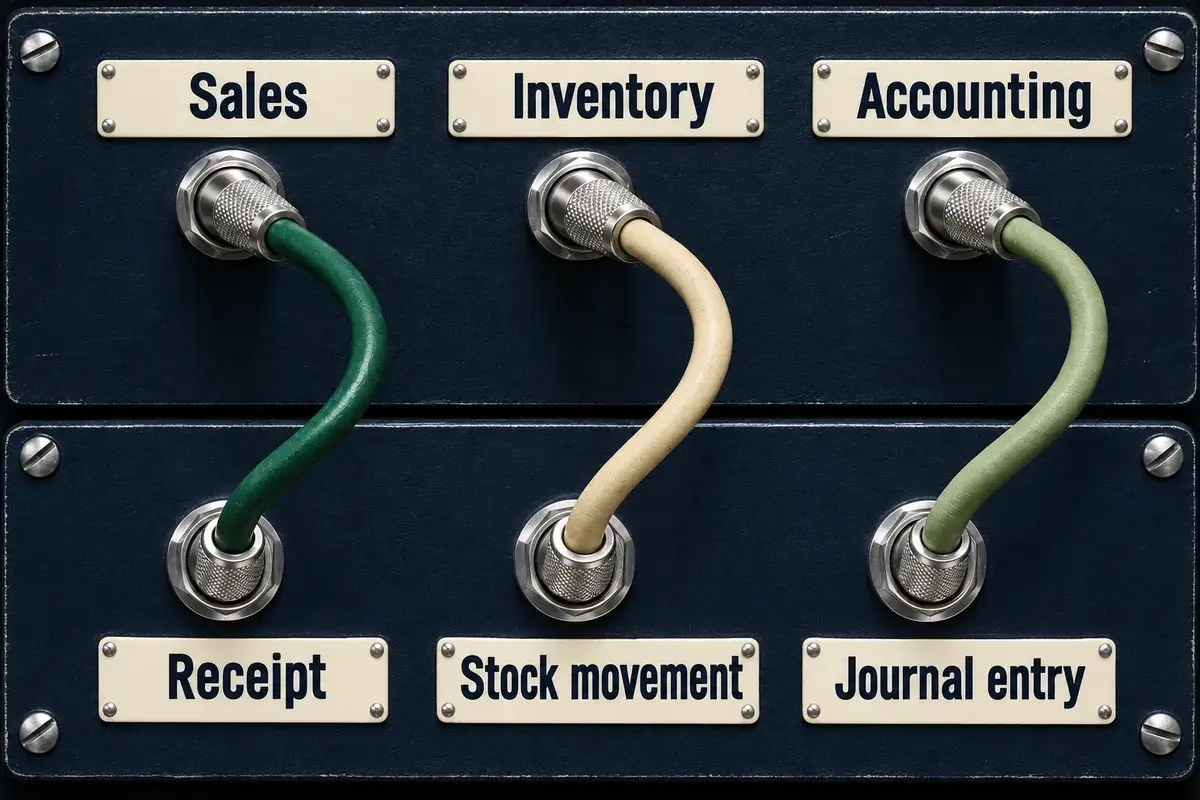
The receipt shows one six-pack. Inventory counts tins, so look for six sold. If sales post in daily batches, find the receipt in that day’s sales report and match the sales subtotal to the journal entry.
Follow the Connection to the Ledger
For an inventory question, review physical movement and accounting value separately, then document the connection between them.
- Follow the selected product movements in the units used by the operating system.
- Identify the cost information and assumptions used in the accounting schedule.
- Compare the supported accounting schedule with the related general-ledger balance.
- Connect each explanation to a source record and reporting date.
This gives the review a traceable path from the operating activity to the amount used in management reporting.
Separate Findings from Proposed Corrections
Keep these outcomes distinct:
- Explained difference: The records support the explanation, such as a reporting cutoff or timing difference.
- Source or mapping question: A unit, account mapping or data handoff needs another check.
- Proposed correction: The evidence supports a change that still needs the required approval.
- Open item: More information is needed to explain or resolve the difference.
Leave unresolved amounts visible. Record what evidence is missing and who will obtain or review it.
Where the evidence supports an economic implication, explain which cost, margin, inventory or cash decision it may affect. Keep that explanation separate from the amount of the reconciling difference.
Make the Next Check Repeatable
Document the source owners, report settings, approved mappings and handoffs behind the comparison. Include the evidence someone will need to review or repeat the work.
After an agreed change, repeat the comparison using the same basis. Record what now agrees, what remains open and the next action and owner.
Start with One Number and Two Sources
Choose a number your team needs to understand. Gather the two reports that should explain it and complete the comparison sheet before calculating the remaining difference.
The first useful result is a clear account of what the records support and what needs another check.